


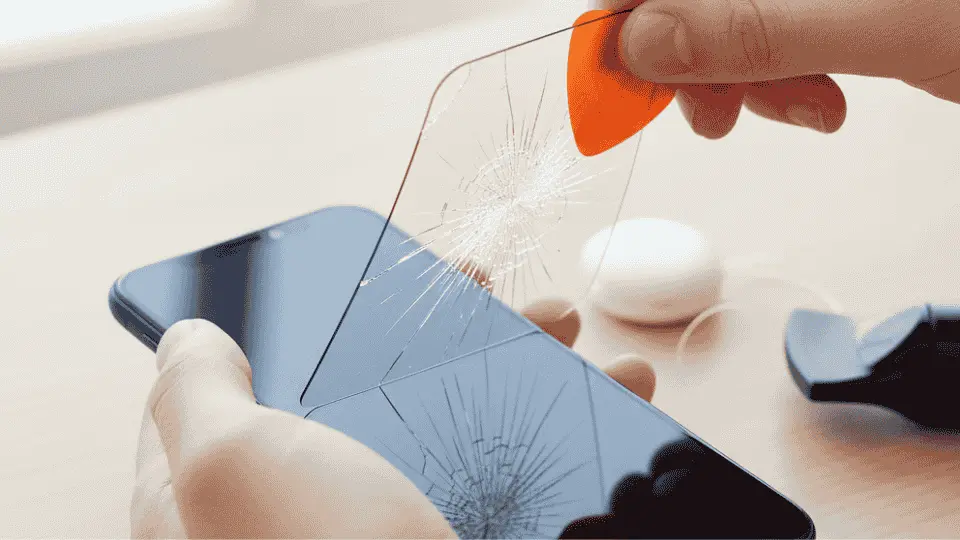
How To Remove Screen Protector From Iphone (Easy Step-by-Step Guide)
Is that spider-web of cracks on your screen protector driving you crazy? Or maybe it’s just old, peeling at the corners, and filled with bubbles that won’t go away. A bad screen protector ruins the look and feel of your beautiful iPhone.
You paid for a premium device, and you deserve to see its stunning display clearly. The good news is that how to remove screen protector from iphone is one of the easiest fixes you can do yourself.
Many people worry they’ll crack their actual screen in the process, but don’t worry. This guide will walk you through the simple, safe steps to get that old protector off and make your phone look brand new again.
Why You Need to Remove Your Old Screen Protector

You might be putting off removing protective screen from iphone, but there are good reasons to do it now.
- It’s Cracked: This is the biggest one.
Should I take off my screen protector if it's cracked?Yes, absolutely. A cracked protector has sharp edges, it obstructs your view, and its structural integrity is gone. It won’t protect your phone from the next drop. - It’s Peeling or Has Bubbles: When the edges lift, dust and lint get trapped underneath. It looks terrible and can eventually cause the protector to fall off anyway.
- It’s Scratched: Deep scratches can make your screen hard to read in bright sunlight.
- You’re Getting a New Phone/Case: Sometimes a new case won’t fit with an old, thick screen protector.
- You Applied It Wrong: We’ve all been there. A new protector that’s crooked or full of dust bubbles is more annoying than no protector at all.
Is It Safe? Does Removing a Screen Protector Damage the Screen?
This is the most common fear, and we can put it to rest right now.
No, does removing screen protector damage screen is not something to worry about if you do it correctly.
Your iPhone’s actual screen (made of materials like Apple’s Ceramic Shield) is incredibly strong and durable. The screen protector is designed to be the thing that breaks first. The adhesive is strong enough to stick, but weak enough to be removed without pulling your phone apart.
The only risk comes from using sharp metal tools (like a knife) or being way too aggressive. If you follow the gentle steps below, your phone’s original screen will be perfectly fine.
Before You Start: Gather These Simple Tools
You don’t need a special kit. You probably have everything you need right in your home.
- A Hairdryer: This is the secret weapon. (A heat gun is too hot!)
- A Lifting Tool: Your fingernail is the best and safest tool.
- Alternate Lifters (if needed):
- A plastic toothpick
- A piece of dental floss
- A thin, plastic card (like a credit card, store loyalty card, or guitar pick). Never use metal.
- Safety (for cracked screens):
- Packing tape
- Gloves and/or safety glasses (optional, but smart for shattered glass)
- Cleaning Supplies (for after):
- A microfiber cloth
- An alcohol wipe or screen cleaning spray
[Image: A flat lay image showing a hairdryer, a plastic card, a toothpick, and a microfiber cloth next to an iPhone. Alt-text: “Tools for glass screen protector removal on an iPhone.”]
How to Remove Screen Protector From iPhone (The Easy Way)
Ready? This is the core step-by-step method that works for most tempered glass and plastic protectors. This is the best way how to take off screen protector without breaking it further.
Step 1: Prepare Your Workspace
Work in a clean, well-lit area, like at a desk or table. This helps you see what you’re doing and prevents you from losing tiny glass shards if the protector is cracked.
Step 2: Gently Heat the Adhesive (The Secret Trick)
This is the most important step for an easy removal. The adhesive is what holds the protector to your screen. A little warmth makes it soft and gummy, releasing its grip.
- Set your hairdryer to its lowest, warmest setting. (Do not use high heat!)
- Hold the hairdryer about 6-8 inches (15-20 cm) away from your iPhone.
- Move it back and forth across the entire screen for about 15 to 20 seconds.
That’s it. Your phone might feel slightly warm to the touch, but it should not be hot. This quick blast is all you need to loosen the glue.
Expert Tip: Never overheat your iPhone. Excessive heat can damage the battery or other internal components. As Apple’s official support page notes, iPhones are designed to operate in ambient temperatures between 32° to 95° F (0° to 35° C). A quick 15-second blast of warm air is perfectly safe.
Step 3: Find a Corner and Start Lifting
Now that the glue is soft, it’s time to lift.
- Inspect all four corners of your iPhone’s screen.
- Look for a spot that is already peeling, has a bubble, or just looks “liftable.” The top-left or top-right corners are often the easiest.
- Try to get your fingernail under the corner.
- Once you get your nail under, you will feel the protector start to separate from the screen. You’ll hear a slight “crinkling” or “peeling” sound.
Can you just peel off a glass screen protector? Yes, once you get that corner up, this is exactly what you’ll do in Step 5.
Step 4: How to Lift Without a Fingernail
If your nails are too short or the protector is on really tight, don’t grab a knife! Try one of these safer tools.
- Plastic Toothpick: Gently (gently!) work the sharp end of a plastic toothpick into the gap in the corner. Pry up just enough to get a grip.
- Dental Floss: Slide a piece of floss under the lifted corner. “Saw” it back and forth gently as you pull it down the length of the phone to separate the protector from the screen.
- Plastic Card: Once you have a tiny gap, slide the corner of a credit card or guitar pick into it. This is a great way to
remove protective glass from iphonewithout using your fingers.
Step 5: Peel Slowly and Evenly
Once you have a corner lifted, don’t just rip it off like a bandage.
- Get a firm grip on the corner you lifted.
- Peel it back slowly and evenly across the phone.
- Try to keep the protector in one piece. Pulling too fast can shatter it, even if it wasn’t cracked before.
- The adhesive will make a slight crackling sound as it releases. This is normal.
- Continue peeling until the entire protector is off.
And you’re done! You’ve successfully learned how to remove screen protector from iphone.
[Video: A short, 30-second video demonstrating the steps: 1) warm air from a hairdryer, 2) lifting a corner with a fingernail, 3) slowly peeling the glass protector off in one piece. Alt-text: “Step-by-step video on how to remove tempered glass screen protector from iPhone.”]
Help! How to Remove a Cracked Screen Protector Safely
If your screen protector looks like a spider’s web, you need to be more careful. Removing a cracked screen protector can create tiny, sharp glass shards.
The goal here is to remove it in one piece and avoid a mess.
- Safety First: If it’s badly shattered, consider wearing light gloves or safety glasses.
- Tape It Together: Take a piece of clear packing tape and lay it over the entire cracked screen protector. Press it down firmly. This tape will hold all the broken pieces together.
- Heat It: Follow Step 2 from above. Gently heat the taped-over screen for 15-20 seconds.
- Lift It: Find a corner (it might be harder to see) and use a plastic card or toothpick to lift the tape and the glass underneath.
- Peel Slowly: The tape will hold all the shards, allowing you to peel the entire broken mess off in one sheet.
This is the safest way to remove broken screen protector iphone without cutting your fingers or leaving tiny glass bits behind.
What About Different Types of Protectors?
The method is slightly different depending on what you’re removing.
Removing Tempered Glass (Most Common)
This is what the main guide above focuses on. Because they are rigid, tempered glass protectors are the easiest to remove in one piece once you lift a corner. The heat trick is most effective on these.
Removing Plastic (PET/TPU) Protectors
These are the thinner, flexible, film-like protectors.
- Heat is less necessary but can still help.
- These are much easier to lift. You can almost always get a fingernail under them.
- They will not shatter or break. You can just peel them off.
- They can sometimes leave behind more of a sticky
adhesive residue from iPhonescreen, which you’ll clean off later.
How to Remove a Liquid Glass Screen Protector From an iPhone
This is a completely different situation. A “liquid screen protector” is a chemical coating that bonds with your screen.
You cannot peel it off.
There is no “protector” to remove. The coating is microscopic and is designed to wear off over 1-2 years. If you absolutely must remove it, you would need a special polishing compound (like cerium oxide), but this is an advanced process that can damage your screen’s original oleophobic (fingerprint-resistant) coating.
Our advice? Don’t try to remove it. Just let it wear off naturally.
A Universal Method: From iPhone 11 to iPhone 16
Are you searching for how to remove screen protector from iPhone 11, how to remove screen protector from iPhone 12, or how to remove screen protector from iPhone 13?
What about the newer models like how to remove screen protector from iPhone 15 or even the upcoming how to remove screen protector from iPhone 16?
Good news: The process is 100% the same.
Whether you have a Pro Max, a mini, or a standard model, the physics are identical. The screens are all glass, and the protectors all use a similar adhesive. The “heat, lift, and peel” method is universal.
This same logic even applies to how to remove screen protector from Android phone. The technology is the same. So, no matter your device, these steps will work.
What to Do After Removing Your Screen Protector
You’re not quite done. Don’t just slap a new protector on the dirty screen.
Step 1: Clean Off All the Gunk and Residue
The old protector likely left behind fingerprints, dust, and sticky adhesive.
- Start with a dry microfiber cloth. Wipe down the entire screen to get any big dust particles or glass fragments (if it was cracked).
- Use an alcohol wipe. Most new screen protectors come with one. Use it to wipe the screen in one direction (e.g., top to bottom) to remove all oils and
how to remove adhesive residue from iPhonescreens. - Dry it. Use the dry side of the wipe or a new, clean microfiber cloth to make the screen perfectly clear and streak-free.
Step 2: Time for a Replacement
Now your iPhone screen is naked and vulnerable. This is the perfect time for replacing screen protector on iphone. Leaving it bare is a risk.
“Even with Ceramic Shield, the front glass on an iPhone isn’t invincible. A good screen protector is a low-cost insurance policy against a multi-hundred-dollar screen replacement.”
— Quote adapted from tech reviewers at 9to5Mac.
Applying a new protector can be tricky. For a perfect, bubble-free installation, check out The Ultimate Guide to iPhone Screen Protectors.
If you’re in the market for a new one, here are some great resources:
Comparison Choosing Your Next Screen Protector
Now that the old one is off, what’s next? Here’s a quick comparison.
| Protector Type | Key Feature | Protection Level | Feel | Ease of Removal |
| Tempered Glass | Feels like the real screen | High (protects from impact) | Smooth Glass | Easy (as shown in this guide) |
| TPU (Plastic) | Flexible & self-healing | Medium (protects from scratches) | Rubbery/Soft | Very Easy |
| Privacy Glass | Hides screen from side | High (impact + privacy) | Smooth Glass | Easy |
| Matte Glass | Anti-glare | High (impact + anti-glare) | Frosted/Paper-like | Easy |
| Liquid | Invisible coating | Low (light scratches only) | Real Screen | Not Removable |
[Infographic: An infographic titled “How to Choose Your Screen Protector” showing three columns: 1) A ‘Clumsy’ person being recommended Tempered Glass. 2) An ‘Outdoor User’ being recommended Matte/Anti-Glare. 3) An ‘Office Worker/Commuter’ being recommended a Privacy screen. Alt-text: “Infographic helping users choose the right iPhone screen protector.”]
People Also Ask (FAQs)
Q: Can I reuse an old screen protector?
A: No. Once you peel off a screen protector, the adhesive is ruined. It will be full of dust and will never stick properly again. You will need to use a new one.
Q: How do I remove the actual screen from my iPhone?
A: This is a very different and complex technical repair. The guide you just read is for the protector (the accessory), not the iPhone’s actual display component. How do I remove the screen from my iPhone? involves opening the device with special tools and disconnecting delicate cables. This should only be done by a trained professional, like at an Apple Store or authorized repair shop.
Q: Will the hairdryer’s heat damage my iPhone?
A: Not if you follow the instructions. Using a low, warm setting for only 15-20 seconds is not enough heat to damage any internal components. It’s just enough to soften the glue. Never use a high-heat setting or a powerful heat gun.
Q: My screen protector is really stuck and won’t lift. What do I do?
A: It just needs more heat. Try the hairdryer again for another 15 seconds. Make sure you are focusing on the corners. Then, be patient and persistent with a plastic card or toothpick. It will eventually give. Don’t ever resort to a metal tool.
Q: How often should I be changing screen protector on iphone?
A: There’s no set schedule. You should replace it as soon as it’s cracked, deeply scratched, or peeling at the edges. A damaged protector isn’t protecting your phone effectively.
Conclusion: You’re All Set!
See? That wasn’t so bad. Removing protective glass from iphone is a simple, 5-minute job that anyone can do.
You’ve successfully learned how to remove screen protector from iphone, how to handle a tricky cracked one, and what to do next. The key takeaways are simple:
- Warm It: A little heat is the secret.
- Lift It: Use your fingernail or a plastic tool at a corner.
- Peel It: Go slowly and evenly.
Now you can enjoy your iPhone’s crystal-clear display or get it prepped for a brand-new protector.
What’s your biggest challenge when dealing with screen protectors? Did this method work for you? Let us know in the comments below!

